This post involves a source of embarrassment which I have held for a while so I kept delaying writing it. But today I will pull up this weed by its roots in the hope of a healthier garden ecosystem. So here I am, admitting that I have read less than 10 books per year for the last 3 years and less than 15 for the 3 years before. While reading 12 books per year is the average in the United States and the median is only 4, my amount of reading was dissonant with the narrative that I have for myself as someone who appreciates literature and knowledge. This was an identity I forged in my adolescence when, as many sensitive children do, I found books to be better friends than the humanoid ones my teachers kept insisting I give a try.
I was encouraged to read as much as I could by my father who saw books as a panacea for any challenge I was facing and a way to develop my own authentic thinking. And it is true that in books, both fiction and nonfiction, there exists deep truths if you can just tap into the right vein. But as I grew older, I viewed reading as a childhood companion and instead become caught up in distractions including those human friends. I could say college was demanding which then transitioned into work and left no time to read for fun. But in truth I think there was another barrier there, perhaps the rationalization that the world was so complex and dazzling that I should experience it firsthand rather than through the detached lens of a book.
But then reality took a sharp turn and I became a widow at the age of 33. My late husband, only 37 at the time of his death, was a voracious reader. He developed his obsession with reading in his late 20s as he transitioned careers and realized he had to learn outside his working hours. He did not share my penchant for whimsical fiction or memoirs of strong women, but powered through tomes on technical trading and macroeconomics. He had discovered that underappreciated secret that books held all the answers. He also once mentioned to me that reading was a personal quest and a book that was pivotal for one person would not always translate to another’s experience.
I sifted through all his books in our apartment after he died and it felt like none of them could prepare me for this next stage of my life. At that time, I could only focus on a few pages before my thoughts ricocheted away like a ping pong ball. I inched through a soothing book called The Ride of Her Life that a friend had sent me about a woman who made her way across the US in the 1950s on her horse. Her pace of travel and my speed of reading were agonizingly slow. During that first year, I also received recommendations for books to manage grief. Most popular were Joan’s Didion’s The Year of Magical Thinking and Sheryl Sandberg’s Option B. While all suggestions were welcome, the book I found most useful and would most recommend to someone processing loss of any kind (divorce, loss of job etc) is the Grief Recovery Handbook.
Though I still found solace in books, the fact remained that the number of books I read continued to dip downwards from 6 – 7 in the two years after my husband died to just reading 3 books last year. An argument could be made that the number of books does not matter as long as you are finding insights or escape when you need them. But I did have a feeling like I was missing out. That there were questions I was not even asking. My sister had continued to be a dedicated reader into adulthood and seemed to relish fiction in a way that I could only vaguely remember. Meanwhile, a friend started sharing her prolific reading journey on social media at the start of this year and somehow that ember of my passion for reading started to rekindle.
Which brings me to how I found myself in a used bookstore in the Mission, tracing my fingers along the shelves like I used to do on trips to Borders with my dad. Over the last several years I had been downloading books on my phone for ease of access. But I think this mode does cause me to feel detached from the content I am consuming. As my late husband pointed out, reading is an intense personal experience. It is essentially a communion between you and the author. Stories, imagery and wisdom are imparted. So while ebooks have the efficiency of modern convenience, bookstores have that thrill of a meet-cute.

At Adobe Books and Arts Cooperative, I picked up an adorable pamphlet on visiting Carmel from the 1960s and a tale of adolescent angst called An Abundance of Katherines. It seems I have been drawn towards themes of melancholy ennui this year which maybe implies that I am going through more of a flux in my mid-30s than I would like to admit. Less than two blocks away from Adobe was the curiously named Medicine for Nightmares, stocked with books by diverse writers. An art exhibit by Gallery Habibi at one end showcased paintings of Palestinian villagers. I picked up four novels and a compendium on South Asian monsters (not pictured) by a Chennai-based published called Blast. Both bookstores stirred different feelings in me. A used bookstore is filled with remnants of the past, literature that served a purpose for one person and now being passed onto a stranger in the future. Meanwhile, Medicine of for Nightmares is the brisk air of that future. Unapologetic and bracing.
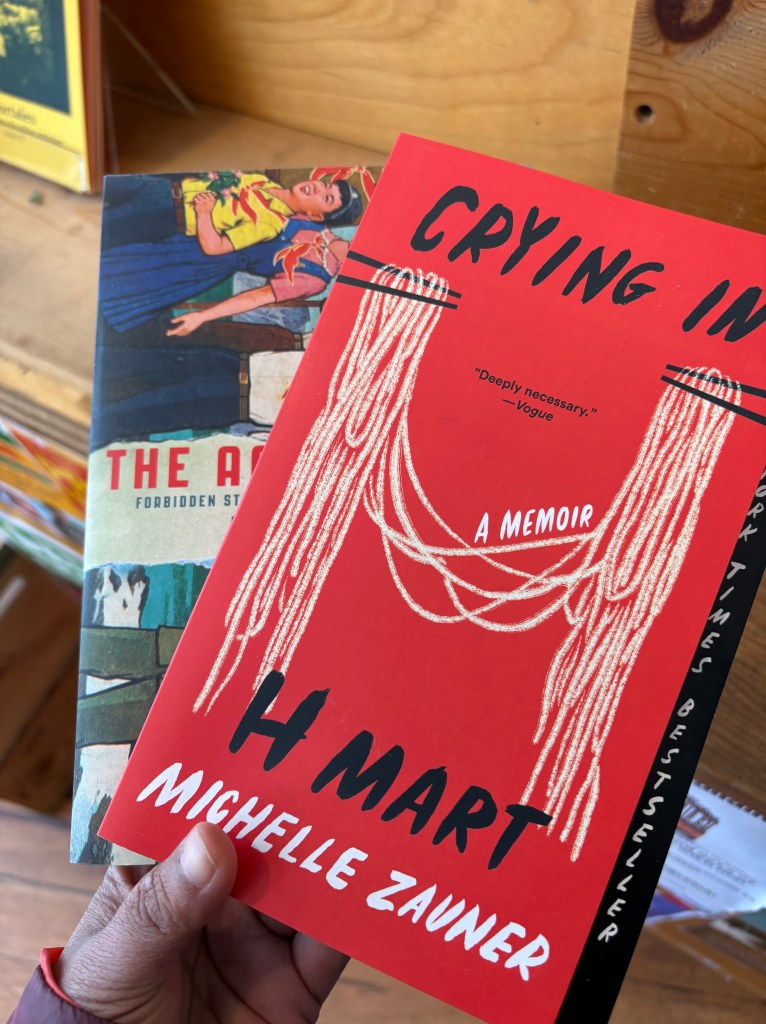
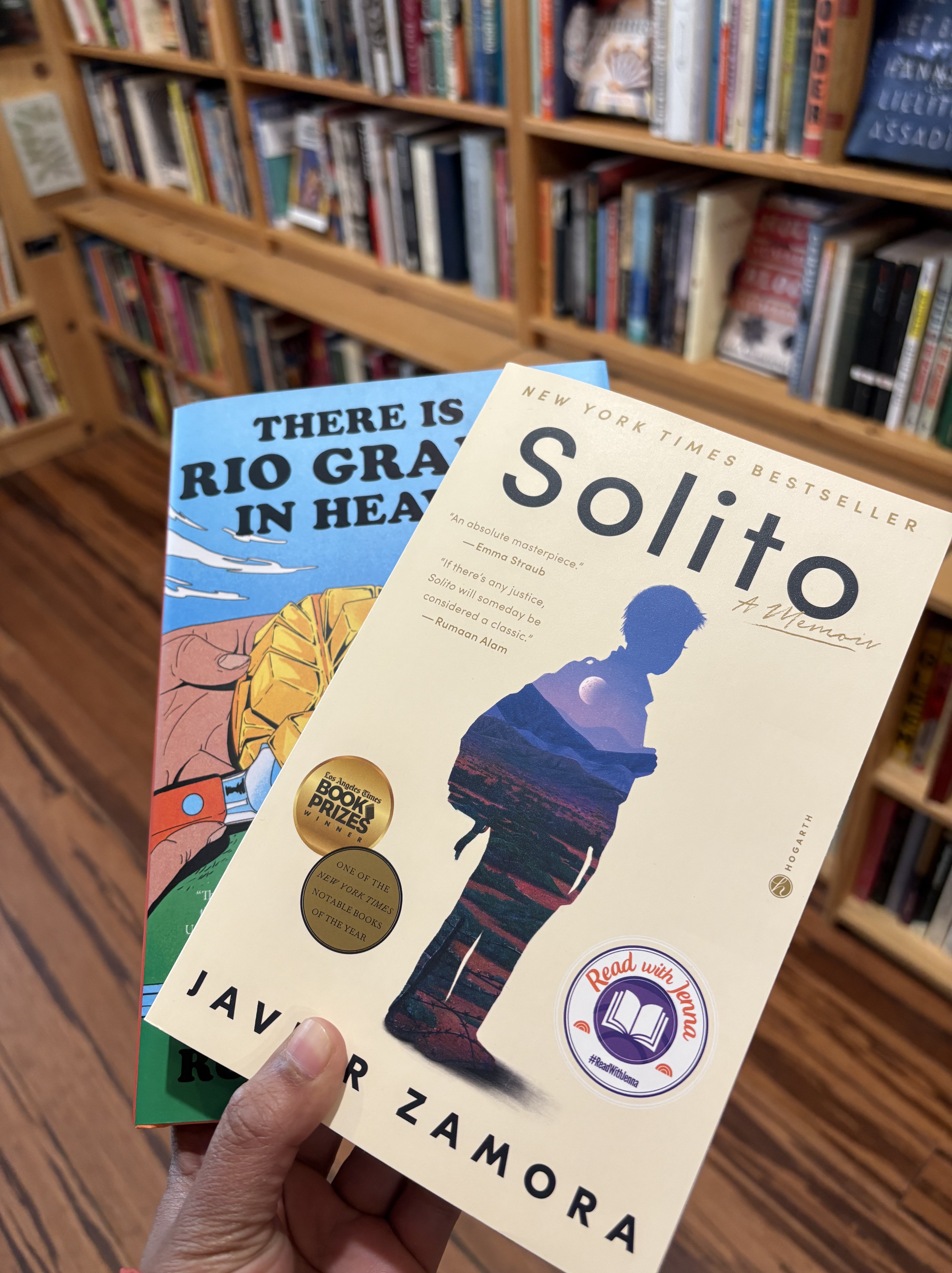
I made my way back to my car, balancing a stack of books in my arms. Perhaps it was ambitious to get so many and I worried they would sit on my shelf judging me with all their unread brethren. Or maybe these books are a challenge, an invitation to dig deeper into myself and see what blooms on the surface.
 One Woman Revival
Leave a comment